The Halt of Dubai Creek Tower: An In-Depth Review


Intro
The Dubai Creek Tower was poised to become a defining feature of Dubai’s skyline, set to surpass the legendary Burj Khalifa. However, the recent pause in the tower's construction has sent ripples through the architectural and investment communities. This moment opens a window for reflection on not only what led to this suspension but also what it means for the broader real estate scene and the city’s image heading into the future.
Many industry insiders are now keenly analyzing the potential fallout from the decision to halt progress on such a massive undertaking. Investors, developers, and homebuyers alike are keeping their ears to the ground, seeking clarity amidst uncertainty. -- As the landscape shifts, understanding the implications can offer insights for potential investment strategies and opportunities going forward.
Prolusion to Dubai Creek Tower
The Dubai Creek Tower, set to become a focal point of Dubai's architectural skyline, represents not just a building but a bold declaration of ambition. This colossal structure aims to surpass its competitors, particularly the Burj Khalifa, in height and elegance. What makes this tower significant extends beyond its height; it symbolizes Dubai's continuous pursuit of innovation and prestige. With its planned height expected to reach over 1,300 meters, this towering masterpiece embodies the spirit of a city that is unafraid to dream big.
Contextual Insights
In the world of mega-tall structures, Dubai Creek Tower is conceived as a cultural and civic hub, linking residential areas with commercial centers. The decision to pause the construction of this tower raises questions that ripple through the local economy and investor sentiment. What does this halt mean for the future of Dubai's urban landscape? It becomes pertinent to evaluate the architectural significance of the tower itself and the benefits it promises to bring not only to the emirate's skyline but also to the broader socio-economic environment.
Key Considerations
- Architectural Innovation: The design of the Dubai Creek Tower integrates advanced engineering techniques paired with aesthetic appeal to create a visually stunning addition to the skyline.
- Economic Implications: Halting projects of this magnitude can have profound effects on local jobs, investments, and the overall economy.
- Public Perception: The tower's status reflects on the city’s ambition. A delayed project might shape public sentiment, influencing potential investors and homebuyers.
The tower was not merely about creating another high-rise; it was about establishing a beacon of modernity in a landscape that thrives on growth and development. The suspension of this project brings to light essential aspects—such as regulatory hurdles, market conditions, and the economic climate—that deserve comprehensive examination.
Overview of the Project
The Dubai Creek Tower stands as a testament to ambition and innovation. The project's significance lies not only in its intended height but also in how it symbolizes Dubai's relentless pursuit of architectural achievements. As the concept of the tower unfolded, it became apparent that this was not just another high-rise. This was to be the tallest structure in the world, meant to outshine even the famed Burj Khalifa.
The design and vision behind the Dubai Creek Tower are rooted in a desire to elevate the skyline and redefine the urban landscape of Dubai. Designed by the renowned Spanish architect Santiago Calatrava, the tower was inspired by the minarets of traditional Islamic architecture. The concept aimed at merging modern aesthetics with cultural significance, ensuring that the tower would resonate deeply with both locals and visitors.
In assessing the architectural significance of this project, one must recognize its intended role in the broader context of Dubai's urban development. The tower was not just an emblem of engineering prowess but also a catalyst for revitalizing the surrounding area, which includes the Dubai Creek Harbour, a mixed-use development encompassing residential spaces, retail outlets, and leisure facilities. The architectural elements were crafted to harmonize with the natural surroundings and the community, promoting a sustainable lifestyle.
When looking at the construction timeline, the project began with great enthusiasm, aiming for completion by the time Dubai hosted the Expo 2020. Ground was broken in 2016, and initial phases progressed swiftly. However, delays began creeping in after the first couple of years. Factors such as evolving market conditions and fluctuating economic health of the region played a crucial role in reshaping timelines. The challenges faced were not only technical. They were deeply linked to the financial viability of sustaining such an ambitious project amid a changing economic landscape.
In short, the overview of the Dubai Creek Tower encompasses several layers: from its ambitious design and architectural impact to its implications for Dubai's growth. This multi-faceted project serves as a reflection of the UAE's dynamism as well as the unpredictability of large-scale investments in the face of economic fluctuations.
"The Dubai Creek Tower is more than just a structure; it embodies the spirit of Dubai's forward-thinking ambition."
In summary, understanding the intricacies of the Dubai Creek Tower project provides valuable insights into not just an individual project, but the trends and circumstances within the broader sphere of global architecture and real estate. This serves as a crucial reference point for investors, developers, and analysts as they navigate the complex waters of the real estate market.
Reasons for Project Suspension
The suspension of the Dubai Creek Tower is not just another anecdote in the annals of architectural ambition. Understanding the reasons behind this halt is crucial, especially considering the aspirations tied to this project. For investors, homebuyers, and developers, the implications are profound. The tower was intended to redefine the skyline, serving as a beacon of modernity and progress for Dubai. However, several factors have contributed to its standstill, which merit detailed examination.
Economic Factors
The economic landscape has been turbulent, and the Dubai Creek Tower project is not immune to its ebbs and flows. A closer look reveals that long-term financial forecasts and shifting investments play a pivotal role in determining whether ambitious projects proceed or stall.


- Budget Overruns: Often, grand designs come accompanied by significant budgetary constraints. The initial projections for the Dubai Creek Tower ballooned beyond what was originally envisioned. With rising material costs and labour charges, financial sustainability became a towering concern.
- Investor Confidence: Economic factors influence not only the cost but also the willingness of investors to commit funds. Projects often rely on a delicate balance of investor enthusiasm and market confidence. A downturn in local economies or global financial turbulence can sap that confidence quickly.
A recent report from Reuters indicates that construction projects in the region have faced collective delays due to these very financial pressures, which have ripple effects across developers and contractors.
Regulatory Issues
Navigating the regulatory waters in Dubai can be akin to sailing through a stormy sea. The complexities of compliance and obtaining necessary approvals are often underestimated.
- Permits and Approvals: The Dubai Creek Tower project required a myriad of permits from various governing bodies. Delays in these regulatory approvals have hindered progress significantly. A handful of approvals are still in limbo, causing developers to pause in anticipation of clearance.
- Changing Regulations: As Dubai undergoes rapid urbanization, the rules governing construction and development evolve. These changes, while necessary for city planning, often create a lag for ongoing constructions such as the tower. New zoning laws or safety regulations can necessitate project reevaluations that introduce substantial delays.
In light of this, regulatory bodies sometimes shift the goalposts, resulting in a comprehensive review that can put a project on ice longer than anticipated.
Market Conditions
The market dynamics play a crucial role in the feasibility of mega projects. The environment surrounding the Dubai real estate market is currently under a microscope.
- Supply and Demand Imbalance: The lush dreams of towering condo complexes and luxury residences have often clashed with economic realities. Currently, an oversupply of high-end properties in Dubai poses questions about the demand for more developments like the Creek Tower.
- Investor Trends: With shifting investor sentiments globally, the appetite for risk has changed. The ongoing fluctuations in material costs and geopolitical tensions can put a damper on property investments, further complicating the prospects for Dubai Creek Tower.
A study conducted by the Dubai Land Department noted that investor interest in large-scale projects has waned somewhat, causing stakeholders to reconsider their strategies.
Impact on Stakeholders
The suspension of the Dubai Creek Tower project carries significant implications for various stakeholders involved in the construction and the broader real estate market in Dubai. The importance of analyzing this impact lies not just in the project itself, but also in understanding how it resonates through the city’s economic fabric. Investors, developers, and the general public each have a vested interest in the outcome, which can sway market sentiments and financial decisions.
Reactions from Investors
Investors have been on the edge of their seats since the news broke about the project's halt. For many, the Dubai Creek Tower represented a beacon of potential returns on investment. The tower's ambitious plans promised to attract not only tourists but also luxury real estate buyers looking for exclusive properties. Now, as the construction cranes stand idle, some investors are expressing disappointment and concern.
- Investment Returns: Investors are particularly worried about how the suspension might affect their expected returns. The once-promising forecasts have become murky, creating uncertainty in the market.
- Market Trends: Many are reconsidering their investment strategies in the wake of this news. Some may choose to pull back on future projects within Dubai, while others might take a wait-and-see approach.
- Speculative Concerns: Investors are also communicating concerns over market speculative behavior. The halt could lead to price adjustments and affect the overall desirability of investing in Dubai's robust skyline.
“The real estate landscape of Dubai is constantly changing, and while the halt may seem temporary, its ripple effects can influence decisions for years to come.”
Feedback from Developers
Developers have a unique perspective on the halt of the Dubai Creek Tower project. With expertise invested in the planning stages, their feedback is crucial to understanding the technical and logistical ramifications of such a pause.
- Project Feasibility: Developers are eyeing the factors that led to the suspension, questioning if the difficulties are surmountable. Many feel that the project, if resumed, needs to re-evaluate under what terms it will proceed.
- Resource Allocation: The sudden stop affects how developers allocate their resources, including labor and materials. Some express concerns about retaining skilled labor, which becomes increasingly difficult if projects are delayed indefinitely.
- Regulatory Navigation: The halt has developers engaging more actively with regulatory bodies to understand how any future changes might affect their other projects. This could lead to heightened dialogue and cooperation moving forward.
Public Sentiment
The reaction from the general public is perhaps one of the most telling metrics of the project's impact. Public sentiment often sways with the winds of news, and the suspension of a major project like the Dubai Creek Tower has evoked various responses.
- Disappointment: Many locals and Dubai enthusiasts express disappointment. The tower was envisioned not just as a structure but as a symbol of Dubai's ambition and vision.
- Skepticism: Some members of the public have become skeptical about Dubai’s real estate market. They question whether projects are genuinely sustainable or merely fleeting spectacles meant to lure investors.
- Community Engagement: Interestingly, some segments of the public are engaging more in dialogues about community needs versus luxury developments. The halt presents an opportunity to reassess priorities in urban planning for future developments, potentially guiding investments that better serve the populace.
Implications for Dubai's Real Estate Market
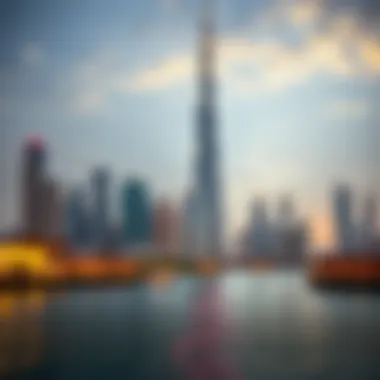
The suspension of the Dubai Creek Tower project is more than just a pause in construction; it casts a long shadow over Dubai's real estate landscape. Understanding the implications for the market involves digging into various facets that encapsulate how this decision reverberates across different sectors, affecting not just investors but also homebuyers and developers.
Impact on Property Values
When a high-profile project like the Dubai Creek Tower comes to a standstill, the immediate concern often revolves around its influence on property values in the surrounding areas. This iconic structure was intended to redefine Dubai's skyline and, in turn, catapult nearby property values upward. However, with its halt, there's uncertainty looming like a thick fog.
- Market Expectations: Investors had anticipated an uptick in property prices due to the prestige associated with owning real estate near the tower. Now, those expectations hang by a thread, dampening enthusiasm across the board.
- Demand and Supply Shift: A stagnant project often leads to a loosening of demand. Potential buyers may hesitate, opting to wait and see how the situation plays out, thus creating an imbalance in the market.
- Psychological Impact: Homebuyers might perceive halted constructions as a red flag, affecting their willingness to invest in surrounding properties. It’s a situation that could lead to a downward spiral in property values in the vicinity if not addressed.
Future Development Strategies
The cease of the Dubai Creek Tower raises questions about future development strategies in the region. Stakeholders now confront the challenge of navigating a shifting landscape that demands re-evaluation of plans and priorities.
- Diversifying Projects: Developers might pivot towards smaller, less ambitious projects. While they may not be skyline-altering, they offer more immediate returns and less risk.
- Reassessing Market Needs: There's a compelling need to gather insights from market trends. What do buyers now crave? Mixed-use developments, affordable housing? Understanding these preferences will guide future endeavors.
- Collaborative Efforts: Developers may find merit in collaboration, pooling resources to create community-focused developments that can sustain a long-term vision rather than high-stakes gambles.
Comparison with Other Projects
To comprehend the impact of the halted Dubai Creek Tower better, a comparison with other prominent global projects can yield various insights. Examining cases of similar delayed constructions uncovers patterns that both investors and analysts can learn from.
- The Tower of David in Venezuela: This incomplete skyscraper symbolizes both potential and stagnation, illustrating how halted projects can reshape urban landscapes into unexpected landmarks.
- The Chicago Spire: Once touted as a masterpiece, its suspension left scars on Chicago's real estate market, leaving investors wary and property values vulnerable.
- Shanghai's Futuristic Horizons: Projects in emerging cities often demonstrate a more resilient response to disruptions, showcasing innovative strategies like scaling down existing plans to remain relevant.
In light of these comparisons, it's clear that the suspension of the Dubai Creek Tower is not just a local concern; it resonates globally, echoing the complexities and challenges faced by real estate markets worldwide. How Dubai responds to its current situation will influence its path forward, potentially serving as a case study for other nations grappling with similar issues.
Future of Dubai Creek Tower
The future of the Dubai Creek Tower holds significant weight in the discussion surrounding one of the most iconic architectural ambitions of the UAE. This section aims to explore the nuances related to its potential revival, long-term aspirations for Dubai, and possible redesigns that could reshape its narrative. Understanding the future trajectory of this project is not merely an exercise in speculation but an essential analysis for investors, developers, and analysts alike who have vested interests in Dubai's ever-evolving skyline and market.
Possibilities for Resumption
The prospect of resuming construction on the Dubai Creek Tower is a complex consideration, often filled with a multitude of factors. The current economic climate, evolving demands of the market, and potential shifts in investment strategies all play a pivotal role in this equation. Rumors have circulated that stakeholders might revisit the project if certain economic indicators align favorably.
- Market Readiness: The appetite for high-rise living and luxury developments in Dubai could dictate whether the project sees the light of day again. If demand returns, construction might be back on the table sooner rather than later.
- Investor Commitment: Potential investors keeping a close eye on construction trends provide a crucial element to the formula. Strong backing from powerful financial institutions or consortiums would add weight to the resumption discussions.
- Regulatory Landscape: As regulations continue to evolve, particularly with sustainability in mind, the resumption of the project might hinge on its ability to align with new standards and norms.
Long-term Vision for Dubai
The long-term vision for Dubai encompasses more than just individual projects; it's about creating a coherent architectural narrative that resonates with the city's aspirations. The Dubai Creek Tower is envisioned not just as a standalone structure, but as part of a broader initiative to position Dubai as a global powerhouse. Key components of this vision include:
- Cultural Integration: Future development strategies aim to weave cultural narratives into the fabric of urban living, establishing landmarks that resonate with both residents and tourists.
- Sustainability Goals: Emphasizing green technology and energy-efficient design elements is non-negotiable in executing long-term plans for the tower.
- Economic Diversification: As Dubai seeks to diversify away from oil dependency, developments like the Dubai Creek Tower can play a role in enticing international business and tourism.
Potential Redesigns
The possibility of redesigning the Dubai Creek Tower offers a unique opportunity to rethink its architectural blueprint while addressing past shortcomings. Adaptations can serve various needs and preferences while keeping the ambitious essence of the project alive.

- Sustainable Features: Integrating renewable energy sources such as solar panels or vertical gardens would align the project with sustainability trends that are increasingly important to investors and the public alike.
- Enhanced Functionality: Redesigns could also focus on making the structure more versatile, allowing it to serve multiple purposes such as residential, commercial, and recreational spaces.
- Aesthetic Revolution: Introducing innovative materials and cutting-edge design concepts can usher in a fresh narrative that captivates the audience and stands the test of time in architectural discourse.
"The ultimate vision is not just about the structure; it’s about creating an experience that resonates with everyone who sets eyes on the tower."
Comparative Analysis: Global Landmarks
When we look at the halted Dubai Creek Tower, it's crucial to place it in a global context. By conducting a comparative analysis with existing global landmarks, we can unearth valuable insights surrounding architectural ambition, project delays, and market conditions. This section strives to highlight not merely the differences but also the similarities that resonate across various projects worldwide.
Historically, architectural endeavors like skyscrapers and monumental towers have faced challenges during their journey from a sketch on paper to a tangible structure reaching for the skies. The lessons from such projects can provide substantial insight for stakeholders involved in Dubai Creek Tower. Here’s what insights we can gain through a comparative lens:
- Identifying Patterns: Many delayed constructions share similar underlying reasons. Economic downturns, regulatory hitches, and unforeseen geological issues are often common culprits. By analyzing these past cases, stakeholders can predict potential roadblocks.
- Cultural Resonance: Iconic structures often reflect the cultural and economic contexts of their regions. Understanding how landmarks like the Burj Khalifa in Dubai or the Shard in London navigated obstacles can shed light on local sentiments and expectations surrounding the Creek Tower.
- Investor Sentiment: How has the market reacted in similar scenarios? Dive into this to gauge potential investor behaviors in such uncertain circumstances.
Case Studies of Delayed Projects
The analysis begins with examining several case studies of significant delayed architectural projects.
- The New National Stadium in Tokyo: Initially intended for the Tokyo 2020 Olympics, delays arose from budget revisions and public backlash over costs. The parallel to Dubai Creek Tower is evident, as both projects faced substantial scrutiny over financial viability.
- Sagrada Familia in Barcelona: This iconic basilica has been under construction since 1882. The involvement of multiple architects and evolving design ideas, much like the vision behind Dubai Creek, has prevented timely completion.
- The Kingdom Tower in Jeddah: Set to be the tallest building in the world, construction is on hold due to economic strains and financial commitments. Investors initially thrilled by the tower's ambition similarly await clarity on the Dubai Creek Tower.
Such case studies are not mere anecdotes; they present patterns—factors that consistently recur and underline the nature of landmark projects. Observing these narratives can help individuals understand how expectations are managed and how best to tread upon muddy waters.
Lessons from Other Global Towers
Much can be learned from the shortcomings and successes of other skyscrapers and towers worldwide.
- Financial Prudence: In reviewing the Burj Khalifa, a luxury housing market sprang up due to its proximity and visibility, creating a conducive environment for property value escalation. Dubai Creek Tower could consider similar strategies.
- Community Engagement: The Eiffel Tower was initially met with hostility but turned around through effective public relations. Proactive community engagement can help turn sentiment favorable towards prolonged projects in Dubai's delicate market.
- Regulatory Framework: Structures like One World Trade Center in New York overcame legal and regulatory challenges by fostering transparent communication with stakeholders. Dubai might benefit from re-evaluating its regulations and fostering a more collaborative atmosphere among its builders and the local community.
"In the world of architecture, the tallest towers are not just defined by their height—but by the stories they reveal through their delays, aspirations, and eventual completions."
Understanding these lessons is essential in navigating the complexities surrounding the Dubai Creek Tower. By positioning its narrative alongside those of other global landmarks, stakeholders can glean strategies that could potentially expedite the project or, at the very least, handle its oscillations with grace.
Epilogue
The suspension of the Dubai Creek Tower project serves as a pivotal moment in understanding not just the ambitions of architectural feats in urban settings but also the numerous factors that influence such grand projects. This conclusion encapsulates why the topic is vital in the current context of Dubai's architectural landscape.
The ramifications of halting a project of this magnitude are far-reaching. On one hand, it reflects the delicate interplay between financial viability, market conditions, and regulatory landscapes, which are crucial for investors and developers alike. On the other hand, such a situation raises questions about how these elements shape public sentiment, and ultimately, the future of Dubai as a global architectural hub.
Summary of Key Points
- Economic Viability: The project's suspension draws attention to the importance of assessing economic conditions before embarking on significant real estate endeavors.
- Regulatory Framework: Compliance with local regulations must be prioritized to avoid unforeseen stoppages that can stall progress.
- Market Trends: Understanding the broader real estate market dynamics is essential for crafting development strategies that are adaptable to shifting demands.
Factors such as economic fluctuations and regulatory challenges can ripple through the real estate market, creating a tricky maze for stakeholders. There is no denying that each of these points becomes vital text in the narrative surrounding the fate of the Dubai Creek Tower, and thus the lessons learned here can inform future developments in the region.
Final Thoughts
As we reflect on the halt of the Dubai Creek Tower, it becomes clear that this situation is not merely an isolated event. Rather, it serves as a reflective mirror to the intricate relationship between visionary projects and practical realities. The aspiration to redefine the skyline of Dubai is certainly commendable, yet it must align with the realities of economic stability and regulatory compliance.
Moreover, investors looking at the real estate landscape should consider not only the symbolic value of such grand designs but also their feasibility in light of current market conditions. While the future may seem uncertain, the lessons drawn from this suspension can guide future initiatives, offering a framework for risk assessment and strategic planning. One must remember that every cloud has a silver lining; pauses like these can lead to better evaluation and, ultimately, stronger foundations for tomorrow's skyscrapers.
In a city characterized by ambition and innovation, the fate of the Dubai Creek Tower remains a significant chapter in Dubai's ongoing story of architectural evolution. As investors, homebuyers, and developers ponder the future, the dialogue around how to harmonize vision with reality continues to unfold.